
Home as a Nervous-System Tool: Feng Shui-ish (But Practical) by Moon Sign
Lifestyle . Home . Nervous System Care
12/3/20256 min read
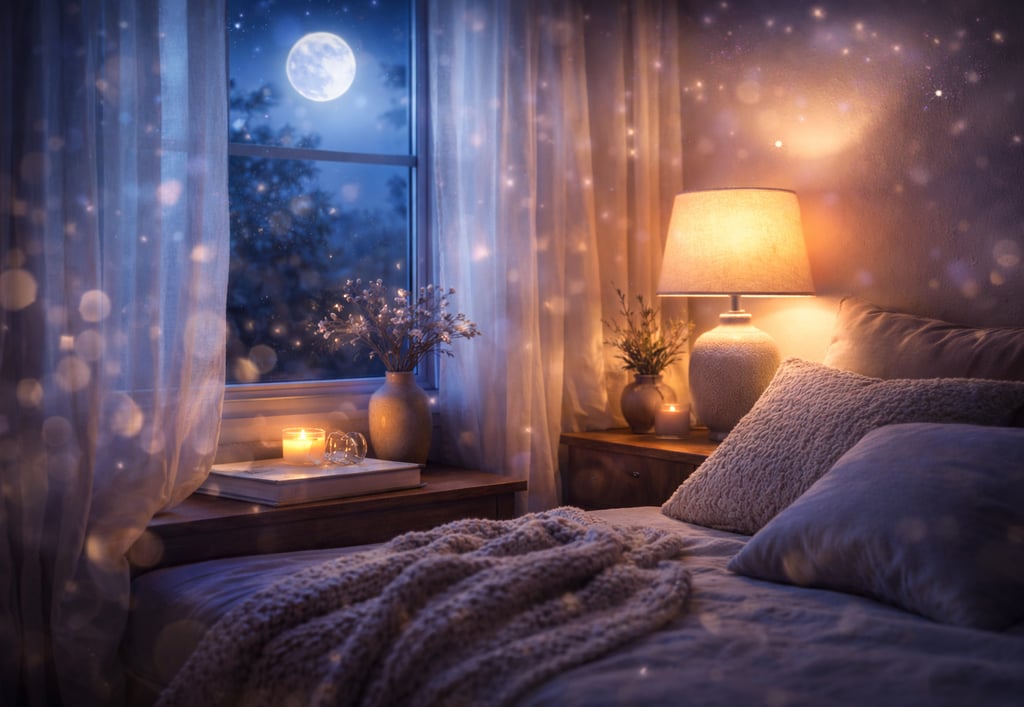
Most people think of their home as a backdrop. A place where life happens, but not something that actively shapes how they feel.
In reality, your home is in constant conversation with your nervous system.
Every light source, sound, scent, texture, and visual cue sends information to your body about whether it’s safe to relax or whether it needs to stay alert. Over time, those signals accumulate. They either help you recover from daily stress or quietly keep you on edge without you realizing why.
This is why some people walk through the door and immediately feel relief, while others feel restless or overstimulated even though nothing is technically wrong. It isn’t about cleanliness or aesthetics. It’s about sensory load and emotional safety.
This is where a feng shui-inspired approach becomes useful. Not as a belief system or design rulebook, but as a way of paying attention. Traditional feng shui focuses on energy flow. A modern, practical version focuses on nervous-system flow.
You don’t need to rearrange your entire home or buy anything new. Small, thoughtful changes often create the biggest comfort returns, especially when they align with how you’re emotionally wired.
Your moon sign offers insight here. It reflects how your nervous system seeks comfort, containment, stimulation, and rest, particularly at home. When your space supports that wiring, rest becomes easier. When it doesn’t, home can feel strangely exhausting.
Why Your Home Has Such a Strong Nervous-System Impact
Your nervous system doesn’t wait for conscious thought. It reacts first, quietly and automatically.
Before you sit down or take off your shoes, your body has already taken in the brightness of the room, the quality of the air, the noise level, and the visual complexity around you. It’s constantly asking one simple question: Is this a place where I can let my guard down, or do I need to stay alert?
When the answer is unclear, your body stays in a low-level state of readiness. Not panic. Not fear. Just enough tension to keep you from fully relaxing. Over time, that constant background alertness becomes exhausting.
This is why clutter you “don’t mind” can still leave you feeling tense. Why a single harsh overhead light can make it hard to wind down at night. Why certain rooms feel soothing while others quietly irritate you.
Your moon sign helps explain which signals your nervous system is most sensitive to and which ones it relies on for regulation. When you understand that, you can stop forcing your body to relax and instead shape your environment so it naturally supports rest.
A Practical, Feng Shui-ish Way to Think About Home
This approach isn’t about perfection or minimalism. It’s about reducing friction between your environment and your nervous system.
Instead of asking whether something looks good, it can help to ask whether it makes your body feel calmer or more on edge. Whether it supports rest or keeps you subtly alert.
You don’t need to change everything at once. Small adjustments compound. One softer light. One quieter corner. One surface that’s easier to keep clear.
Over time, these small shifts teach your nervous system that home is a place where it doesn’t have to brace itself.
Fire Moon Signs: Energy, Warmth, and Flow
(Aries, Leo, Sagittarius)
Fire moons need their homes to feel alive, but not chaotic. Your nervous system settles when energy is allowed to move freely rather than feeling trapped or dulled.
Spaces that feel stagnant, cramped, or overly subdued can leave you restless rather than relaxed. At the same time, too much visual or sensory intensity can push you into overstimulation without you realizing it.
Fire moons often feel best in spaces that invite movement. You may naturally pace while thinking, rearrange furniture, or gravitate toward rooms with more light and airflow. Complete stillness doesn’t always calm you. Sometimes it feels like stagnation.
Layered, warm lighting works best. Harsh overhead lights can feel irritating, while overly dim spaces can drain your energy. Lamps and adjustable lighting help create flexibility throughout the day.
Sound can actually be regulating for you. Soft music, ambient noise, or open windows can help energy circulate, especially during transitions like cooking or winding down.
Clutter tends to gather in high-activity zones such as entryways, desks, and shared surfaces. The goal isn’t elimination. It’s flow. Clearing even one busy surface can make the entire space feel lighter and easier to move through.
Earth Moon Signs: Stability, Order, and Sensory Calm
(Taurus, Virgo, Capricorn)
Earth moons need their homes to feel predictable and grounded. Your nervous system relaxes when your environment feels steady, intentional, and reliable.
Disorder isn’t just annoying for you. It creates low-grade stress. When things don’t have a place, part of your mind stays busy tracking them, even when you’re trying to rest.
At the same time, overly rigid or sparse spaces can begin to feel cold. Comfort matters just as much as order.
Soft, even lighting helps your body settle. Bright white bulbs or uneven lighting can feel unsettling. Natural light is especially regulating when it’s allowed to spread evenly through a room.
Texture plays a big role for earth moons. Natural materials, soft fabrics, and tactile comfort give your nervous system something to land on. Purely functional spaces can feel draining over time.
Quiet is often soothing, but complete silence isn’t necessary. Gentle, predictable sounds such as a fan or distant outdoor noise can create a sense of stability.
Clutter often shows up as paper piles or “I’ll deal with this later” stacks. Creating one intentional holding area can dramatically reduce stress without demanding constant tidying.
Air Moon Signs: Mental Ease and Visual Breathing Room
(Gemini, Libra, Aquarius)
Air moons need their homes to feel mentally spacious. Your nervous system calms when your mind has room to move without being constantly pulled in different directions.
Visual clutter is especially draining for you, even if you don’t consciously register it. Too many objects competing for attention can create mental fatigue.
At the same time, spaces that are too empty or stark can feel ungrounded. You need openness, but also warmth.
Bright but soft lighting works well, especially natural light. Being able to adjust brightness throughout the day helps you stay mentally balanced.
Scents should feel light and clean. Heavy or lingering smells can make it harder to think clearly.
Sound can be helpful if it’s subtle and non-intrusive. Quiet music, ambient noise, or outdoor sounds can keep your mind engaged without overwhelming it.
Clearing even one visually busy surface often brings immediate relief. Your home supports you best when it gives your thoughts room to breathe.
Water Moon Signs: Emotional Safety and Soft Containment
(Cancer, Scorpio, Pisces)
Water moons experience home emotionally. Your nervous system settles when the environment feels gentle, protective, and contained.
You’re sensitive to atmosphere. Lighting, sound, and emotional tone affect you quickly, often before you consciously notice what’s happening.
Harsh lighting can feel exposing. Bright overhead lights often keep your body guarded. Soft, diffused lighting helps create a sense of safety, especially in the evening.
Texture matters deeply. Soft blankets, cushions, and fabrics provide physical reassurance. Hard, echoing spaces can make you feel unprotected.
Sound should be gentle and predictable. Sudden noises can feel jarring. Soft background sound or quiet music often feels soothing.
Clutter for water moons is often emotional rather than purely physical. Sentimental items accumulate because they carry meaning. Containing them thoughtfully can reduce overwhelm while honoring their importance.
Your home works best when it feels like a cocoon rather than a display.
Small Changes With Big Comfort Returns
You don’t need to redesign your home or commit to a big project to support your nervous system. In fact, large changes can sometimes create more stress, not less. New furniture, major reorganizing, or trying to “fix” everything at once can overwhelm your system before it ever has a chance to relax.
What matters most isn’t scale. It’s consistency.
Your nervous system learns through repetition. It pays attention to what happens every day, not what happens once in a while. That’s why small, repeatable signals often have a bigger impact than dramatic overhauls.
A single softer light that you turn on each evening tells your body that the day is winding down. A quiet corner that stays relatively calm, even if the rest of the house is active, gives your nervous system a place to land. One surface that’s usually clear reduces visual noise and the subtle pressure of unfinished tasks.
These changes may seem almost too simple to matter, but your body responds to predictability. When the same cues show up again and again, your nervous system starts to trust them. It learns that home is a place where alertness can soften and effort can drop.
Over time, that trust accumulates. You may notice that it becomes easier to breathe deeply when you walk in the door. Easier to sit down without immediately reaching for distraction. Easier to rest without feeling like you should be doing something else.
This is how comfort builds. Quietly, gradually, without forcing anything.
And that quiet accumulation is what makes rest feel real, not temporary.
A Grounding Reminder
Your home doesn’t need to be perfect.
It needs to be kind to your nervous system.
Your moon sign isn’t a rulebook. It’s a lens that helps you notice what supports you.
Start with one room. One signal. One small shift.
That’s enough.
Connect
Join our cosmic chat and stay in tune.
stars@theemooncult.com
© 2025. All rights reserved.